Invisalign Marketing: 9 Strategies Dentists Use to Fill Aligner Cases

Key Takeaways
- Sell a free scan or consultation in the ad, then close the aligner case in the room.
- Use Align's provider marketing site, Smile Concierge and bootcamp checklist before paying for new creative.
- Keep Invisalign out of handles, domains and your business name, and confirm your licensing terms with Align.
- Give aligners their own Google campaign and landing page, and target Meta cosmetic ads to adults 18 and older.
- Judge every channel by cost per started case, not cost per lead.
Invisalign marketing is how a dental practice turns local demand for clear aligners into started cases. Advertise a free scan or consultation, capture searchers on Google, reach adults on Meta, rank locally, use Align's provider resources, follow Align's trademark rules and follow up for weeks. Measure cost per started case, not cost per lead.
Clear aligner treatment is one of the highest-value cases in general dentistry, and one of the slowest to close. Most patients research for weeks, compare prices and ask friends before they book anything.
That is why the practices that win treat Invisalign marketing as a funnel. Each strategy below covers one step, from the first ad a patient sees to the day they take home their first aligners.
Align's brand rules, state advertising law and the Google and Meta health policies all apply to aligner ads, so every rule we mention links to its source.
What Is Invisalign Marketing?
Invisalign marketing is the work a dental or orthodontic practice does to turn local interest in Invisalign clear aligners into consultations and started cases. It sits on top of the national advertising Align Technology runs for the brand.
Align says on its provider practice support page that it has invested $150M in advertising, from social media to sponsorships, to raise public awareness and demand. Your job is the local half: making sure that demand finds your practice, not the one down the road.
The audience is mostly adults. The American Association of Orthodontists reports one in three orthodontic patients is over 18, and that adults tend to prioritize discreet options such as clear aligners.
Adults weigh three things before they book: total cost, how aligners will look at work, and how long treatment takes. Every ad, page and follow-up message should answer all three.
Use the Marketing Resources Align Gives Providers
Before you pay for creative, check what Align already provides. Many practices never open it.
- The Invisalign marketing site. Align's practice resources page describes customizable brochures, scripts, videos and TV spots on the Invisalign marketing site, plus pre-printed materials in the Invisalign Store.
- In-office materials. Align offers brochures, posters and videos meant to start conversations about treatment in your waiting room and operatories.
- The Smile Concierge team. According to Align, this team helps people who complete a smile assessment on Invisalign.com book appointments with Invisalign providers in their area.
- Align Marketing Bootcamp. An invite-only Align 360 program with five sessions: social media, the practice website, reviews and advocacy, user-generated content, and the new patient protocol.
Use the Align Marketing Bootcamp page as a free checklist even without an invite: update your Invisalign provider logo, keep a dedicated treatment page with one clear booking button, and set up a review system.
Align assets are the same for every provider in your city. Your offer, targeting and follow-up decide who gets the case.
Build an Offer That Pre-Qualifies Patients
A free consultation or scan is the entry ticket. What separates aligner ads is how early they talk about money.
We searched the Meta Ad Library for active US ads in October 2026. Orchard Dental Group in Fair Oaks, CA states the whole price: Invisalign for $4,500 with a free consultation. North Shore Orthodontics offers $500 off, 0% financing and a free first visit.
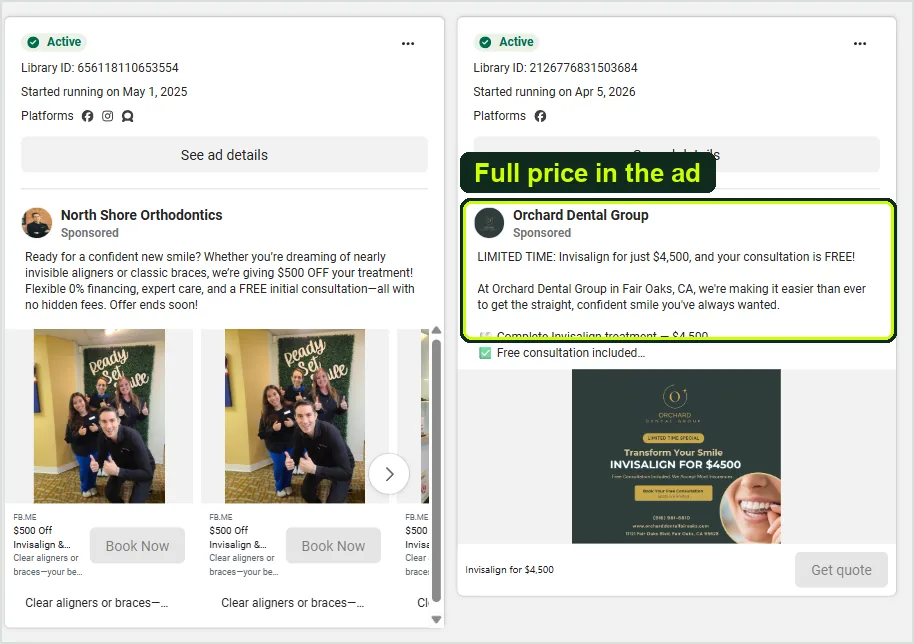
Source: Meta Ad Library: search for clear aligners free consultation
A price in the ad filters out shoppers who would never start, so your coordinator spends time on people who can say yes.
Price claims carry legal weight. California's Business and Professions Code section 651, which covers dentists, requires price advertisements to be exact and bans phrases such as "as low as" and "and up."
If your offer is free, the FTC's guide on the word free says its terms and conditions belong in close conjunction with the offer. Put what the free visit includes, and what it does not, right next to the word.
Invisalign Advertising on Google Search
Google catches people already searching for aligners, which makes it the highest-intent channel you can buy.
Those clicks are expensive. WordStream's 2026 benchmarks put dentists' median cost per click at $8.00, third highest of 23 industries, with a $72.97 cost per lead.
You can bid on the brand name. Google's trademarks policy says it will not restrict trademarks used as keywords, although a complaint from the trademark owner can lead Google to restrict confusing or misleading use in ad text.
- Its own campaign. Keep aligner keywords out of your general dentistry campaign so budget and cost per lead stay visible.
- Treatment-led keywords. Group Invisalign, clear aligner and invisible braces terms, each with your town or near me.
- A dedicated landing page. Send clicks to a page with the price or monthly figure, financing, the consultation offer and one booking button, never your homepage.
- Audience limits. If Google flags your ads under its health in personalized advertising policy, advertiser-curated audiences such as Customer Match and your own data segments cannot be used, while predefined Google audiences still can.
Our dental Google Ads guide covers campaign structure, bidding and negative keywords in more detail.
Invisalign Ads on Facebook and Instagram
Meta reaches adults who want straighter teeth but have not searched yet. Intent is lower than on search, so your offer and follow-up have to work harder.
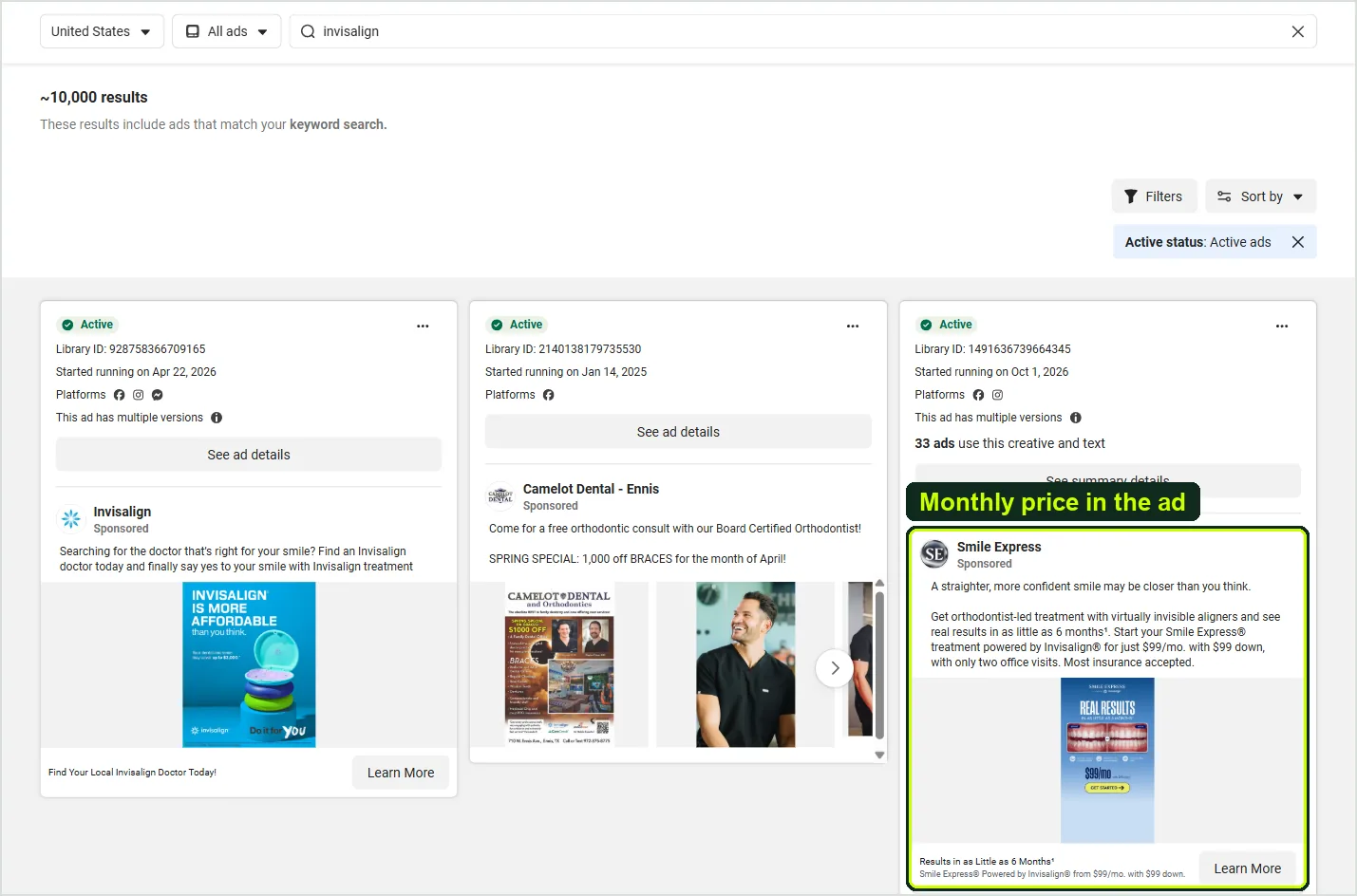
Align advertises there too, sending people to find a local Invisalign doctor. Smile Express, powered by Invisalign, leads with $99 a month and $99 down.
Meta's health and wellness policy requires ads for cosmetic procedures to target people 18 or older. It also bans statements of inferiority about appearance and promises of specific outcomes within a set timeframe without qualifiers.
So write "Thinking about straighter teeth?" instead of "Embarrassed by your crooked smile?", and never promise a result by a date.
Test three angles: the price or monthly figure, discretion at work, and the free scan. Our Google Ads vs Facebook ads comparison covers how to split budget between the two.
Follow the Rules for the Invisalign Name and Dental Ads
Invisalign is a registered trademark and an FDA-regulated device, so your marketing answers to Align and to your state, not only to the ad platforms.
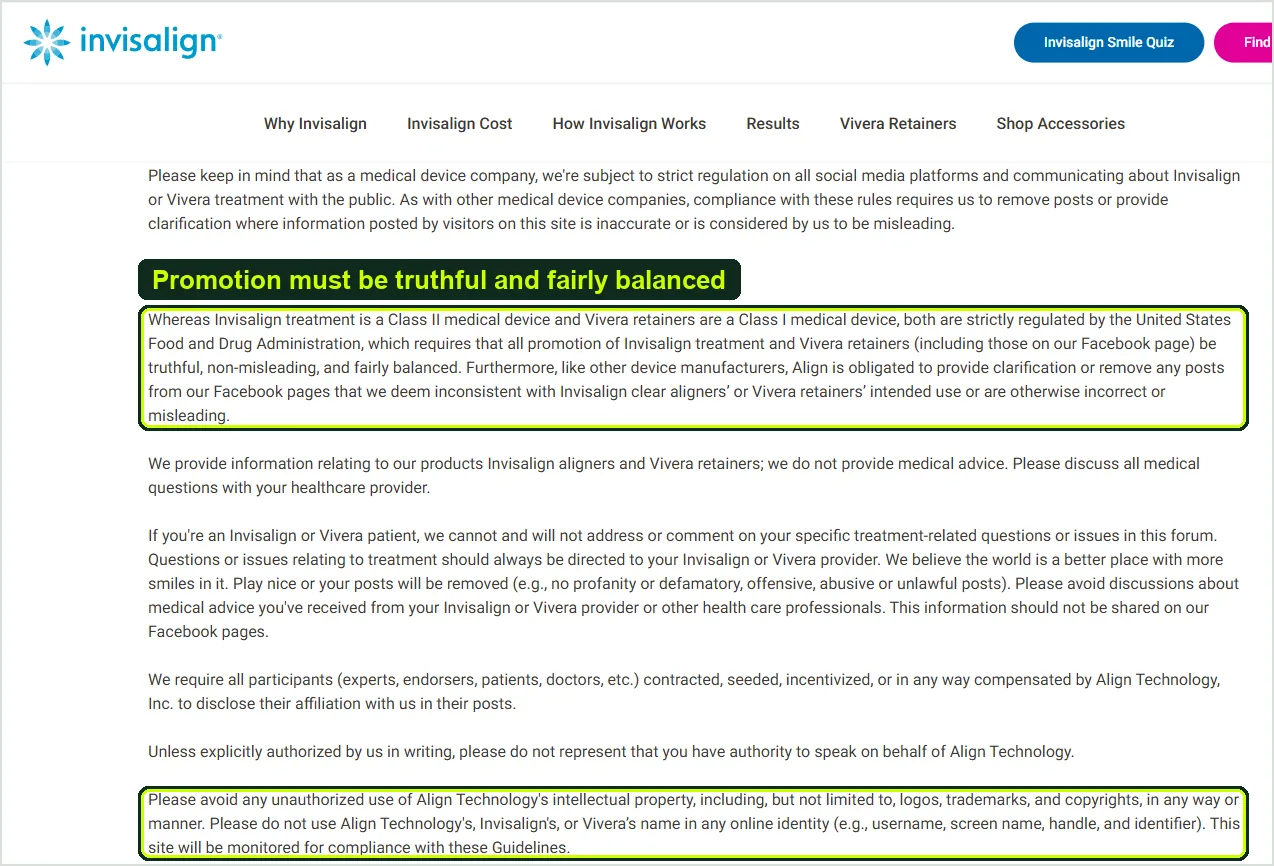
Align's social media guidelines say Invisalign treatment is a Class II medical device and that its promotion must be truthful, non-misleading and fairly balanced. They also ask people not to use Align's logos or trademarks without authorization, or the Invisalign name in a username or handle.
Align enforces this. On an Orthodontic Products podcast, orthodontic marketer Mary Kay Miller read from an Align letter telling a practice with no Invisalign order in 12 months to remove the brand from its website, social accounts, ads, URLs, meta tags and Google Business Profile.
Her advice: confirm your licensing requirements with your Align rep before using brand assets, and if you offer several aligner brands, give each its own page.
- Name the practice, not the product. Keep Invisalign out of handles, domains and your business name.
- Describe only what you provide. Use the Invisalign name only for treatment you deliver with Invisalign aligners.
- Disclose paid partnerships. The ADA's 2025 Code update added an advisory opinion that applies the false or misleading standard to influencers and requires them to disclose paid partnerships.
- Check your state board. Dental advertising rules vary by state. California's section 651, for example, requires before-and-after photos to name the procedures performed, use comparable poses and lighting, and state that results may not occur for all patients.
Rank Locally for Invisalign Near Me Searches
Paid ads stop the day the budget does. Local search keeps sending aligner patients.
- A dedicated treatment page. One Invisalign or clear aligner page with cost, financing, treatment length, consented patient photos and a booking button. Our dental website design guide lists the elements that convert.
- A clean Google Business Profile. Google's business representation guidelines say your profile name must reflect your real-world name without service or product information, and a business selling another brand's product uses only its own name.
- Reviews that name the treatment. Ask aligner patients for two or three sentences about their experience. Miller notes that review text matching the search, such as Invisalign, is what Google highlights.
- Answers to real questions. Publish pages on cost, treatment length and aligners versus braces, the questions patients type before they book.
Our Google Business Profile checklist for dentists walks through categories, services, photos and posts.
For the wider plan, see dental SEO for small practices.
Invisalign Lead Generation From Your Patient List and Social Content
Your hygiene patients are the cheapest aligner leads you have. They already trust you and visit twice a year.
Tag patients who mention crowding, gaps or old braces, then send that segment a scan invitation by email and text. Our dental email marketing guide has templates.
Former braces patients whose teeth have shifted are an easy segment to name in that message.
On social, Align's bootcamp recommends a practice hashtag, a photo moment in the office and a content calendar. Short videos of a scan, a first fitting or a coordinator answering cost questions beat stock photos. Our dental social media marketing guide covers formats.
Convert Consultations Into Started Cases
The ad buys the visit. What happens in the room decides whether that spend turns into a case.
- Show the simulation. A projected result motivates patients. Say it is a projection, not a promise.
- Hand over one written plan. Total cost, duration and what is included. A vague plan delays the decision.
- State the total, then the monthly figure. Leading with the monthly number alone erodes trust once the patient does the math.
- Offer a start date. A specific date is easier to say yes to than a promise to think about it.
Many patients still leave undecided. A simple follow-up sequence keeps the case alive:
- Day 2. A call or text from the coordinator to answer questions and resend the written plan.
- Day 7. An email with financing options and what a week in aligners looks like.
- Day 21. A call offering a start date or another look at the simulation.
- Monthly after that. Helpful content by email, stopping as soon as the patient asks.
Track every lead to a started case. Our guide to dental patient acquisition cost shows how to calculate it from spend, consultations and acceptance.
If nobody in the practice can test ads weekly and run this follow-up, outside help starts to pay. Our guide to choosing a cosmetic dentistry marketing agency lists the questions to ask.
FAQs
What is Invisalign marketing?
Invisalign marketing is how a dental or orthodontic practice turns interest in Invisalign clear aligners into consultations and started cases. It combines Align Technology's national brand advertising and provider resources with the practice's own local work: Google and Meta ads, a dedicated treatment page, a Google Business Profile, reviews, patient list outreach and a consultation process built to close.
How do I market Invisalign to new patients?
Advertise a free scan or consultation with a price or monthly figure in the ad. Run Google Search ads for people already looking and Meta ads for adults who have not searched yet, send both to a dedicated landing page, and invite existing patients who mention crowding. Then convert with a simulation and a written plan, and follow up for at least three weeks.
Can I use the word Invisalign in my ads?
Generally yes, if you are an active Invisalign provider. Google's trademarks policy does not restrict trademarks used as keywords, though it can restrict misleading use in ad text after a complaint. Align asks practices not to use its logos or trademarks without authorization or put Invisalign in a handle, and has told inactive providers to remove the name. Confirm your licensing terms with your Align rep.
Can I use before-and-after photos in Invisalign ads?
Usually, with care. Meta requires cosmetic procedure ads to target people 18 or older and bans negative statements about appearance. State rules add more: California's section 651 requires before-and-after images to name the procedure, use comparable poses and lighting, and state that results may not occur for all patients. Use real patients with written consent and never edit the results.
What is a good cost per Invisalign lead?
There is no universal number, so work backwards from your case fee, show rate and acceptance rate. As a reference point, WordStream's 2026 benchmarks put the median cost per lead for dentists on Google Ads at $72.97. A cheap lead that never starts treatment is still expensive, so judge every channel by cost per started case.
Should I hire an Invisalign marketing agency?
Hire one when nobody in the practice can test ads every week, call new leads within minutes and track each lead to a started case. A good agency reports cost per started case, not just lead counts, and knows Align's trademark rules and healthcare ad policies. Ask for named examples with spend, consultations and starts before you sign.
Conclusion
Invisalign marketing works as a funnel: Align's national demand, a clear local offer, ads that follow the rules, a profile that ranks, and a consultation built to close.
Start with the free resources Align gives you and your own patient list, then give aligners their own campaign and measure cost per started case. See how we build this on our dental marketing page.
If you want your aligner funnel mapped with your own numbers, book a free 15-minute call. We will show you where patients drop out.
Mor Romano
CTO, Growbi
Written and fact checked by Mor Romano, published , last reviewed .
More about Mor RomanoGet this system built for your business
Book a strategy call and we will model a realistic appointment target from your budget, market, and offer.
Keep reading
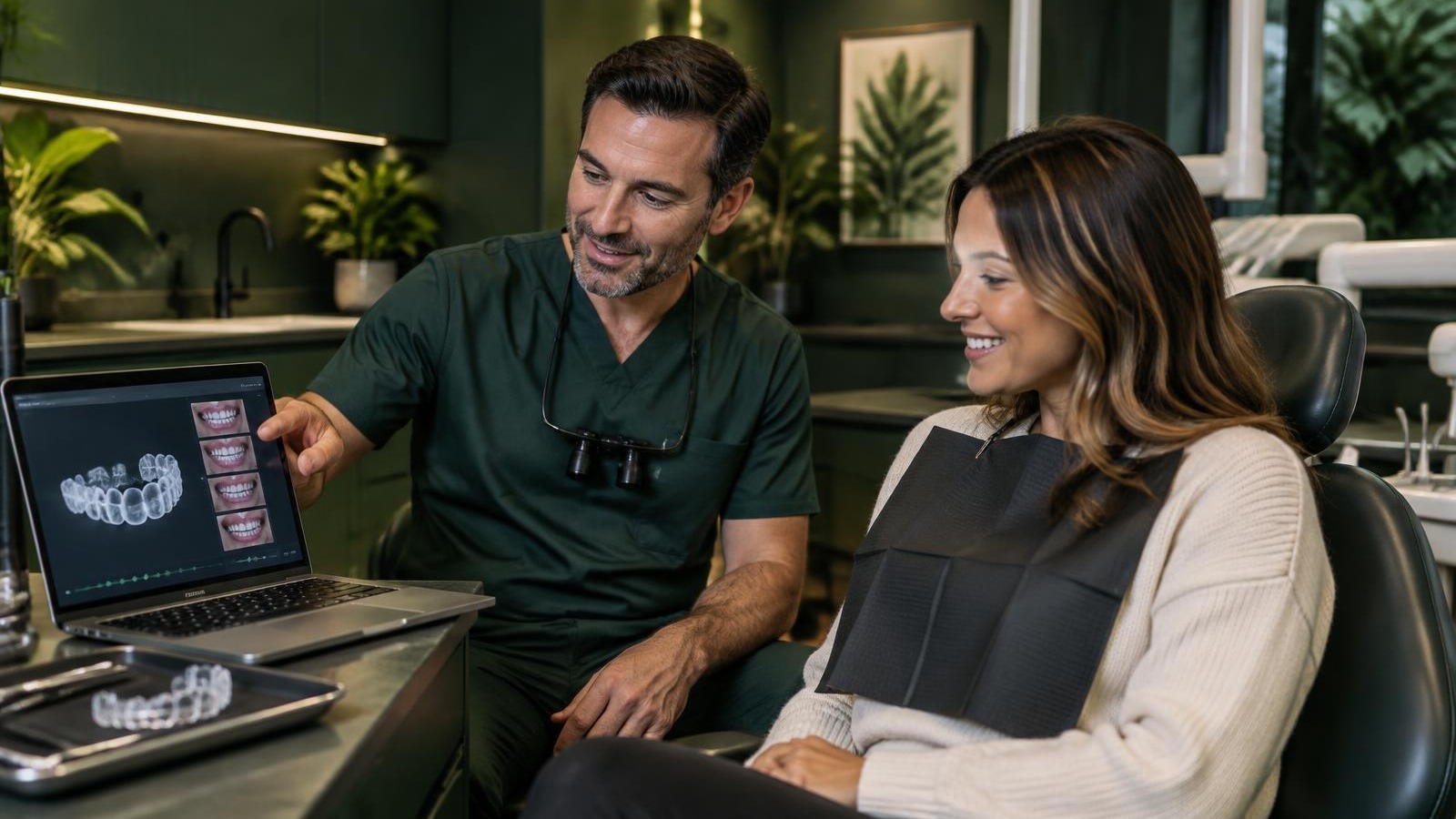
Cosmetic Dentistry Marketing Agency: How to Choose One for Invisalign and Cosmetic Cases
Dental Google Ads: How to Run Campaigns That Book Patients
Dental Patient Acquisition Cost: How to Calculate and Lower It
Google Ads vs Facebook Ads for Dentists: Cost, Intent and When to Use Each
Google Business Profile Optimization: The Dental Practice Checklist

Dental Email Marketing: Recall, Reactivation and Treatment Follow-Up