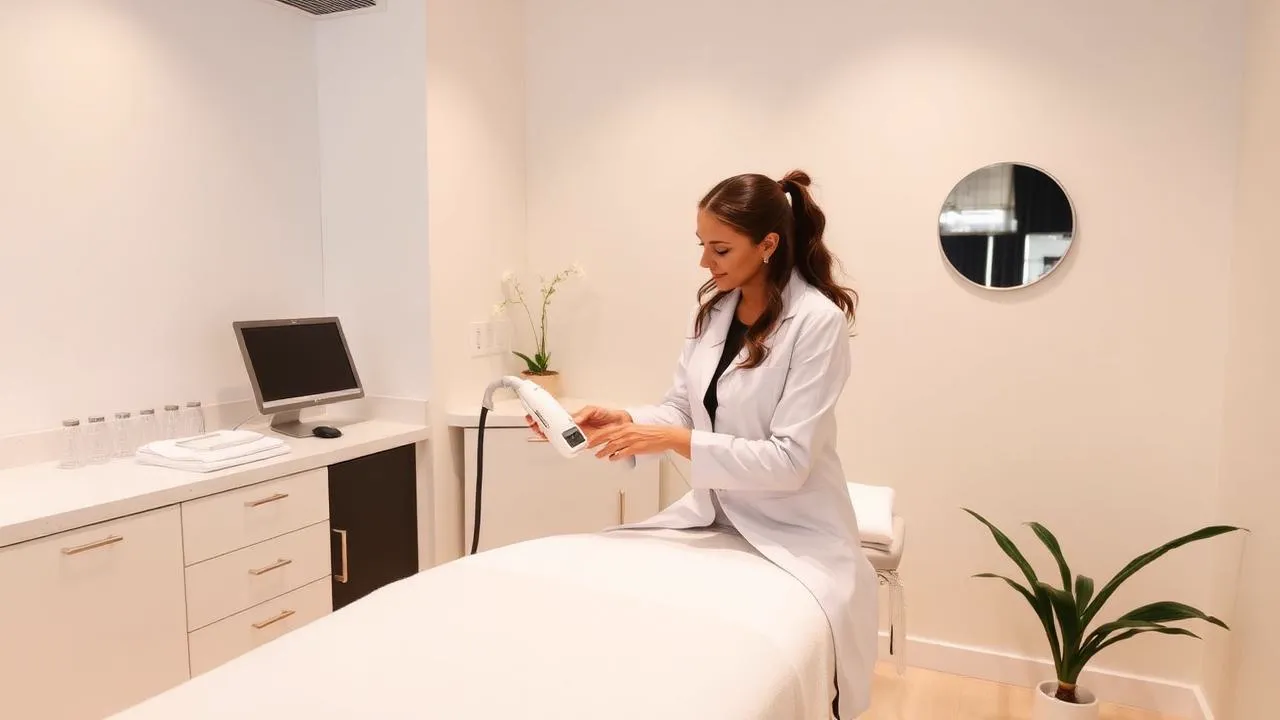
Laser Hair Removal Marketing: Package Pricing and Repeat Bookings

Key Takeaways
- Sell laser hair removal as a package per body area, because results come from a course of treatments, not one session.
- Make the consultation and patch test the step your ads promote, then book the whole course at that visit.
- Run your biggest campaigns in fall and winter so clients finish before summer, and keep search running all year.
- Say permanent hair reduction, not permanent removal, which matches the wording used in FDA device clearances.
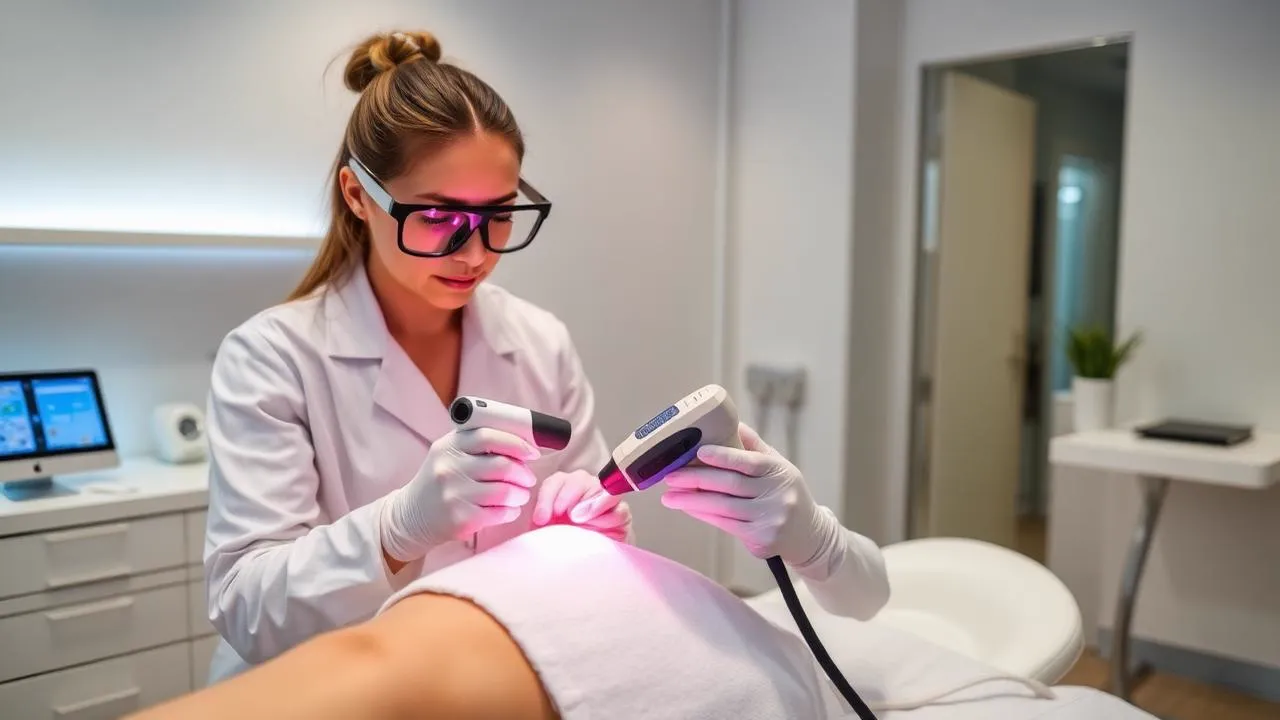
Laser hair removal marketing works best when you sell a course, not a single session. Price each body area as a package, advertise the consultation and patch test as the first step, run campaigns in fall and winter so clients finish before summer, and book every session upfront so clients complete the course.
Laser hair removal brings people into a med spa who might never book an injectable. That makes it one of the best acquisition services in aesthetics, provided you treat the first course as the start of a relationship rather than a single sale.
Marketing laser hair removal well comes down to pricing, timing, channels, ad claims, and the steps that turn an inquiry into a finished course. For the wider plan these campaigns fit into, see our 90-day med spa marketing plan.
Why laser hair removal needs its own marketing approach
Most med spa services are sold one visit at a time. Laser hair removal is sold as a course, and that changes what your ads can promise.
The FDA lists hair removal among the cosmetic uses of medical lasers and notes that laser procedures carry risks such as pain, infection, scarring, and skin color changes (FDA).
That shapes your marketing in two ways. You need a consultation before anyone buys, and your ads cannot promise a result. What you can sell is a clear process, a qualified provider, and a realistic plan.
Pricing laser hair removal as a package
Hair grows in cycles, so a single session cannot deliver the outcome a client is imagining. Price the course, not the visit.
Per-session pricing sets clients up to be disappointed after the first visit and forces you to re-sell them again and again. Package pricing for a defined area across a realistic number of sessions matches how the treatment works and steadies your revenue.
- Per session. Client behavior: Drops out after one or two; Clinic effect: Constant re-selling, poorer outcomes
- Package per area. Client behavior: Completes the course; Clinic effect: Predictable revenue, better results and reviews
- Multi-area bundle. Client behavior: Higher upfront value; Clinic effect: Fewer clients, larger transactions
- Maintenance membership. Client behavior: Returns after the course; Clinic effect: Long-term retention and cross-selling
National hair removal clinics already market this way. One Milan Laser Hair Removal ad running in the Meta Ad Library leads with a lifetime guarantee included with every purchase, not with a session price.
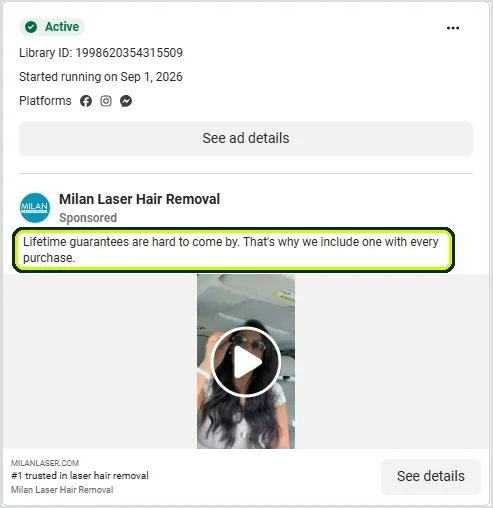
You do not need to copy a chain's guarantee to compete with it. A local clinic can win on a named provider, a package quoted after a real assessment, and a maintenance plan the client can see from day one.
Explain the session range. Explaining that the number of sessions depends on hair and skin type, and that it is set at the consultation, builds more trust than a headline price. Clients who understand the course are more likely to complete it.
When to Advertise Laser Hair Removal
Many clients start thinking about laser in spring, as summer approaches. That is a poor time to begin a course that takes months and requires sun avoidance.
Run your biggest ad campaigns in fall and winter with that exact message: start now and you can be finished by summer. It fills quieter months and gives clients a better experience.
Search demand does not switch off in winter. Google Ads keyword data we pulled through DataForSEO shows about 201,000 US searches a month for laser hair removal from October 2025 to September 2026, with peaks of 246,000 in March and July.
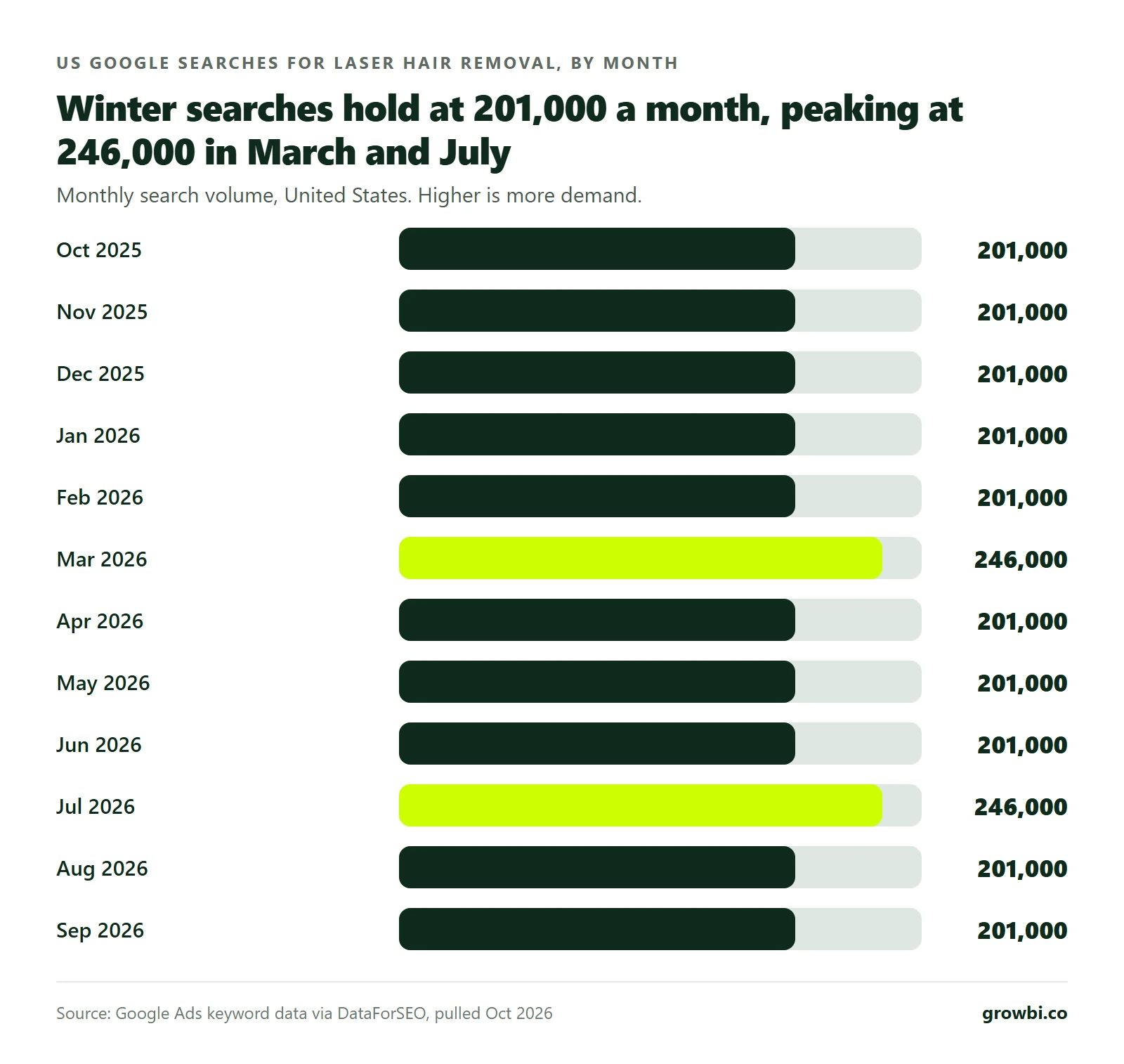
Source: Google Ads keyword data via DataForSEO, pulled Oct 2026
So keep a smaller always-on search campaign running year round. Raise the budget when you push the fall and winter message, and use spring inquiries to book consultations for a fall start.
Channels that work for laser hair removal
Search and social do different jobs. Search captures people who already want the service, while Meta and other social media create demand.
People searching for laser hair removal near them already want it, so Google search campaigns and a complete Google Business Profile capture that demand. Meta reaches people who have not started looking yet, which suits fall and winter campaigns that ask them to start early.
- Google search. Job: Capture people already looking; What to measure: Cost per booked consultation
- Google Business Profile. Job: Show up in local map results; What to measure: Calls, direction requests, and bookings
- Meta ads. Job: Create demand and retarget site visitors; What to measure: Booked consultations, not leads
- Email and SMS. Job: Sell to existing clients and keep courses on track; What to measure: Package sales and course completion
WordStream's 2026 Google Ads benchmarks, covering campaigns from April 2025 to March 2026, report an average cost per click of $4.62, a conversion rate of 10.35%, and a cost per lead of $39.25 for Beauty & Personal Care (WordStream).
Laser is only one part of that category and your local market will differ, so use those figures to sanity-check results, not as targets. The number that matters is your cost per package sold.
From cost per lead to cost per package
This is the math behind the med spa ad campaigns we run. Take the $39.25 benchmark lead and divide by the share of leads who show up. That gives you the cost of one consultation.
Then divide the cost of a consultation by your own close rate, the share of consultations that buy a package. The result is what each package costs you to sell.
Compare that cost per package with the margin on your package, not with the price of one session. If you want this calculated from your own booking data, book a free 15-minute call.
The consultation and patch test as the conversion point
Your ads should sell the first step, not the whole course. The consultation and patch test is low commitment for the client and gets them into the building.
- Advertise the consultation and patch test. Most clinics require it anyway, it is a low commitment for the client, and it gets them into the building.
- Assess and quote in person. Skin type, hair type, and treatment area determine suitability and session count. Quote the package at this visit.
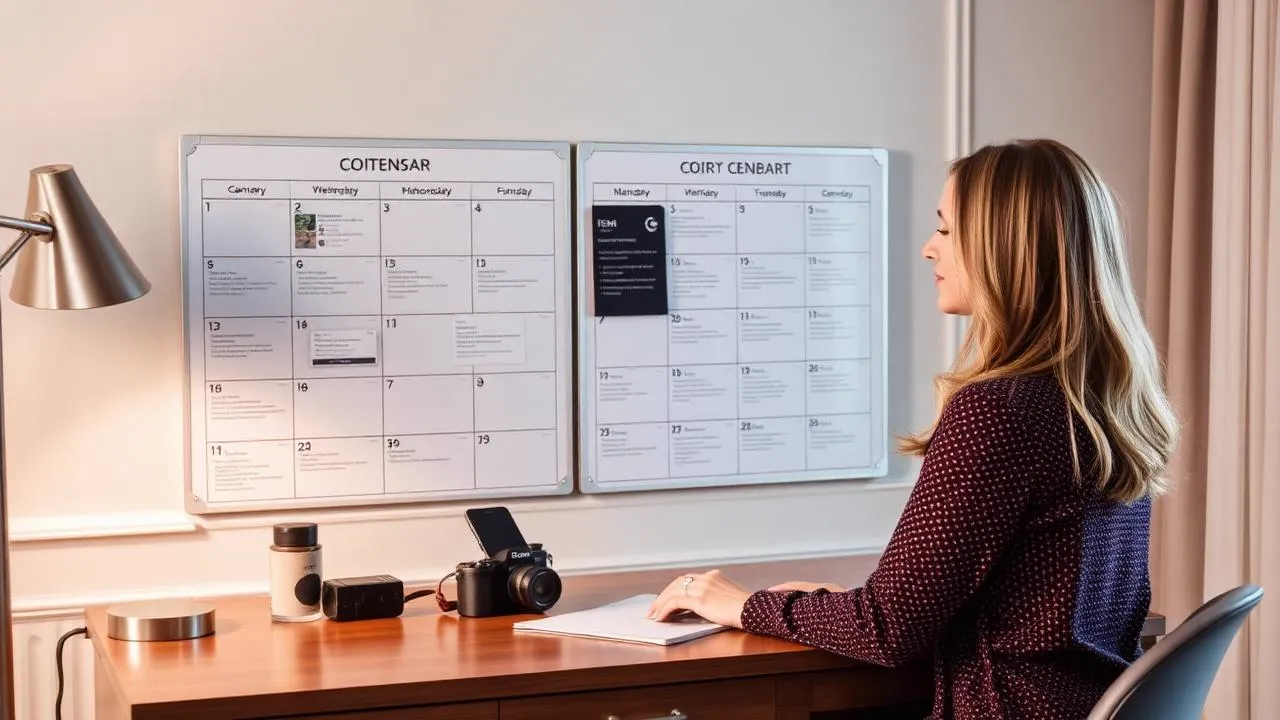
- Book the whole course at once. Schedule every appointment on the day the package is purchased, so the course is on the calendar from the start.
- Remind and rebook missed sessions fast. A missed session breaks the treatment interval, which can affect results and the review that follows.
- Plan the maintenance conversation. At the final session, book the first maintenance visit and introduce one related service.
- Ask for the review at completion. Satisfaction tends to be highest at the end of a completed course, not after the first appointment.
Speed matters at the first step. A consultation request that waits a day for a callback is a lead you paid for and then handed to the next clinic. Our guide to reducing med spa no-shows covers the reminders that keep booked consultations on the calendar.
What you can say in laser hair removal ads
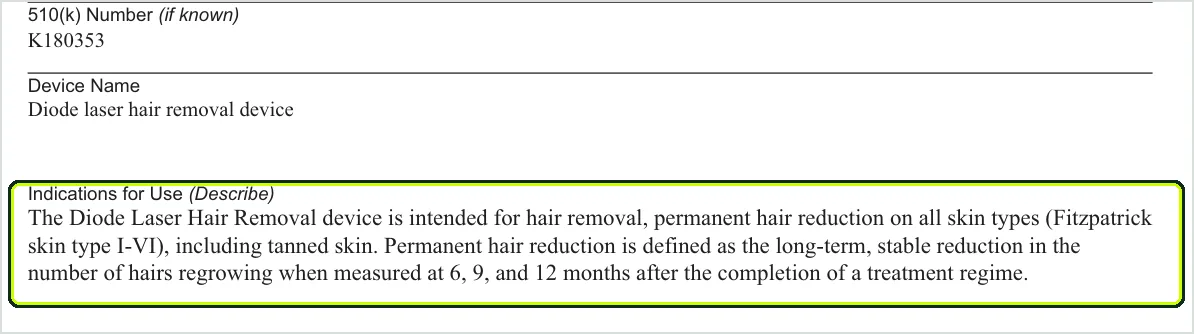
Use the wording regulators already use. FDA device clearances describe laser results as permanent hair reduction, not permanent removal.
One example clearance defines it as a long-term, stable reduction in the number of hairs regrowing, measured at 6, 9, and 12 months after a treatment course (FDA 510(k) clearance example). So the first check comes six months after the final session. Check the cleared indications for your own device.
- Do not promise a number of sessions or a specific result. Explain that both depend on hair and skin type and are set at the consultation.
- Avoid before and after imagery in paid social, where Meta's ad standards restrict body-focused creative. Our Meta ads compliance guide covers the details.
- Use inclusive imagery, but only claim suitability for skin types your device and providers actually treat.
- Land ads on a dedicated treatment page with pricing ranges, treatment areas, and booking, not on your homepage.
- Cross-promote to existing clients. An injectable client who does not know you offer laser is missed revenue you already paid to acquire.
Put your provider's credentials on that treatment page too. What kind of license is needed to operate a laser varies by state, so confirm the rules with your state board and say plainly who performs the treatment.
Turning laser clients into long-term clients
A finished course is the start of the relationship. During the course, clients visit several times over months, which gives your team repeated chances to build trust.
Use those visits. Introduce your providers, mention one related service that fits the client's goals, and book the first maintenance visit at the final session. A membership program can bundle maintenance and related services into one monthly payment.
This is also where the service becomes profitable. A laser hair removal business that only sells first courses keeps paying to find more clients, while one that converts finished courses into maintenance and a second service spreads that acquisition cost across years.
FAQs
Can you advertise laser hair removal as permanent?
Avoid promising permanent removal. FDA device clearances use the term permanent hair reduction, meaning a long-term, stable reduction in the number of hairs regrowing, measured months after a treatment course. Describe results that way, explain that outcomes vary with hair and skin type, and check your device's cleared indications.
How do you get laser hair removal clients to complete the course?
Book every appointment in the course at the point of purchase, explain that the session count depends on hair and skin type, and follow up quickly on any missed session so treatment intervals stay on track. Asking for a review at the end of the course also rewards completion.
How profitable is a laser hair removal business?
It depends less on the session price than on completed courses and repeat visits. Track cost per package sold against package margin, then add maintenance visits and related services. A clinic that only sells first courses keeps paying to replace every client.
Conclusion
Laser hair removal marketing works when the whole funnel is built around the course: a package price, a consultation that quotes it, and a calendar booked on the day of purchase.
Time the big push for fall and winter, keep search running all year, and judge every channel by cost per package sold, not cost per lead.
If you want to see what a package costs you to sell today, book a free 15-minute call and we will map it from your own spend and bookings.
Mor Romano
CTO, Growbi
Written and fact checked by Mor Romano, published , last reviewed .
More about Mor RomanoGet this system built for your business
Book a strategy call and we will model a realistic appointment target from your budget, market, and offer.