Med Spa Membership Programs: How to Price, Launch and Keep Members


Key Takeaways
- Price each tier from the delivered cost of the included treatment, never from a competitor's monthly fee.
- Two or three tiers are enough, each built around one treatment patients already come back for.
- Unused credits are treatments you still owe, so cap rollover and track the balance every month.
- Show the terms before checkout, get clear consent to the recurring charge and make canceling simple.
A med spa membership program charges a fixed monthly fee for an included treatment or credit plus member pricing. It makes money when the fee is set above the delivered cost of what is included, members visit more often than other patients, unused credits are capped, and cancellation is simple enough that members leave on good terms.
Repeat visits already carry most med spas. AmSpa's 2024 State of the Industry recap reports that an average of 73% of patients are repeat patients, spending an average of $527 per visit.
A medical spa membership puts a monthly price on that habit. Designed badly, it turns into a discount club with a growing pile of owed treatments. This guide covers the design decisions that separate the two.
How a med spa membership program works
The patient pays the same fee each month and gets something defined in return: one treatment, a credit toward any service, or member pricing.
Most programs mix those three. An included facial or peel brings the member in each month, while member pricing on injectables and products gives them a reason to spend more once they are in the chair.
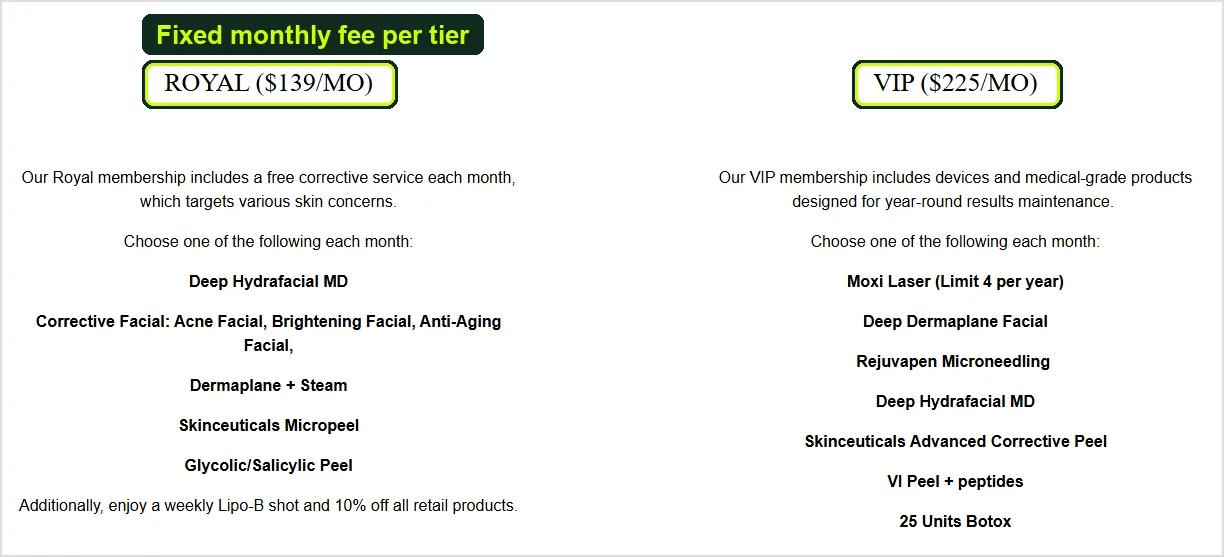
Maui MedSpa in Austin is a clean example. Its Royal tier costs $139 a month for one corrective service, its VIP tier $225 for options such as 25 units of Botox, and it states a 6-month commitment with no carry-over of unused services.
- Membership. How the patient pays: Same fee each month until canceled; Best for: Maintenance treatments done every 4 to 6 weeks
- Package. How the patient pays: Prepaid for a fixed number of sessions; Best for: Laser or microneedling series with an end date
- Pay per visit. How the patient pays: Menu price at each appointment; Best for: First visits and occasional treatments
Why memberships raise visits per patient
The case for a membership is frequency. Members who have already paid for this month's treatment book it, and every visit is a chance to add a service.
In a 2019 AmSpa article on membership programs, plastic surgeon Dr. A. Jay Burns said the practices he analyzed averaged 1.44 visits per patient per year, while subscription patients came 2.9 times a year and spent 35% more per visit.
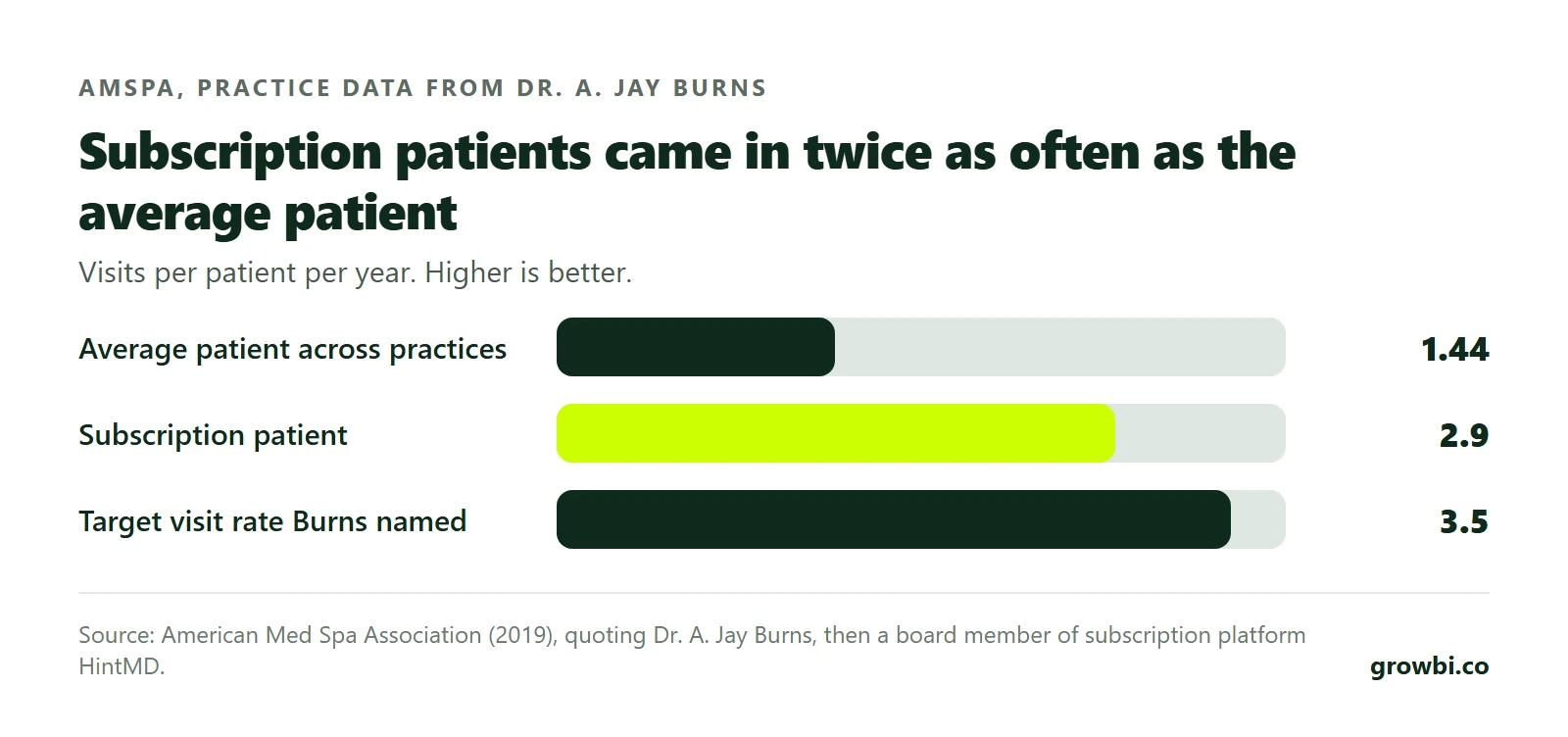
Burns sat on the board of a subscription platform at the time, so read these as one vendor-linked data set, not a forecast. Pilot with 20 to 30 loyal patients and compare their visits with non-members before you open it to everyone.
Designing two or three membership tiers
Each tier needs one anchor treatment members want each month. Everything else in the tier is a supporting perk, not the reason to join.
- Entry tier: a monthly facial, peel or dermaplane, plus member pricing on retail.
- Core tier: a monthly credit usable on any service, plus priority booking.
- Injectables tier: a set number of Botox or Dysport units every few months, plus member pricing on filler.
Stop at three. A fourth tier adds one more decision for the patient and one more policy for the front desk, without giving anyone a new reason to join.
Pricing a membership from delivered cost
Start from what the included treatment costs you to deliver: product, provider minutes, room time and card fees. The monthly fee has to clear that number with margin.
Here is the math on an illustrative Core tier. Assume a $149 monthly fee and an included facial that costs $70 to deliver. Swap in your own numbers before you set a price.
- Uses all 12 credits. Fees per year: $1,788; Delivery cost per year: $840; Margin: $948
- Uses 12 plus 3 rolled over. Fees per year: $1,788; Delivery cost per year: $1,050; Margin: $738
- Fee cut to $119, uses all 12. Fees per year: $1,428; Delivery cost per year: $840; Margin: $588
Notice what moves the margin most: a $30 price cut copied from a competitor removes $360 per member per year. Build the model on members using every credit, so unused credits are a bonus, never the plan.
Unused credits and the rollover rule
Every banked credit is a treatment you have already been paid for and still owe. Rollover helps sign-ups, but it grows that debt each month.
A cap of two or three months is a workable middle ground. Write down what happens to banked credit on cancellation, and review the outstanding balance per year and per provider so a busy season does not create a delivery crunch.
Cancellation rules and consent
Make leaving as clear as joining. A federal appeals court struck down the FTC's click-to-cancel rule in 2025, but the older laws behind it still apply.
As law firm Cooley explains, the Eighth Circuit vacated the rule on July 8, 2025, yet the Restore Online Shoppers' Confidence Act still covers online subscriptions, and states such as California and New York have their own renewal laws.
In practice: show the fee, commitment and renewal terms before checkout, get a clear yes to the recurring charge, and give members a simple way to cancel. Run the final terms past your attorney.
Selling the membership at the second visit
The first visit earns trust; the second is when a membership makes sense. By then the patient has seen a result and knows what they plan to spend.
Show the annual comparison in dollars at checkout: twelve menu-price facials against twelve months of the fee, plus priority booking. Then send one short email that repeats the numbers, as part of the med spa follow-up sequence you already run.
First-visit offers feed this step. An entry offer brings new clients in, and a campaign built around long-term treatment plans gives the membership pitch a natural place at the second visit.
Keeping members once they join
Members cancel when they stop using what they pay for. Low usage is the earliest churn signal you have, so watch it each month.
- Book the next visit before they leave, so the credit is used all year.
- Text when credit is waiting and nothing is booked within three weeks.
- Call anyone who skips two months before they decide the fee is wasted.
- Protect the appointment with the reminder timing in our guide to reducing med spa no-shows.
What memberships do to your ad budget
A member is worth months of fees, so you can afford to pay more to acquire one than you would for a single treatment sale.
A Growth99 report summarized by AmSpa puts new patient acquisition at $132 against a $527 average visit. Burns put the average rise in spend per subscription patient at $1,196.
Run the numbers on arrived patients, not leads. Our guide to med spa lead generation shows how to measure cost per arrived patient, and the ad budget myth explains why spend should follow bookings. If you want a second opinion on your numbers, book a free 15-minute call.
FAQs
Are med spa memberships worth it for patients?
They are when the patient would book the included treatment most months anyway. Add up twelve menu-price visits, compare that with twelve months of the fee, and check the commitment period and what happens to unused credit before signing.
Can a med spa membership include Botox or Dysport?
Yes. Some clinics include a set number of units, such as the 25 units in Maui MedSpa's VIP tier, while others offer member pricing per unit. Because injectables are spaced months apart, a credit or per-unit discount fits better than a monthly inclusion.
When should a new med spa launch a membership?
Once enough patients return on a regular schedule to fill a pilot group of 20 to 30 members. Before that, track repeat visits by treatment so you know which service to make the anchor of each tier.
Conclusion
A med spa membership program is a pricing decision before it is a marketing one. Set each tier from delivered cost, cap rollover, and treat banked credit as a debt you still owe.
Launch with a small pilot, sell it at the second visit, and watch usage each month. Members who keep booking stay, and their fees give you room to spend more on acquiring the next one.
If you want a second set of eyes on your tiers and what they mean for your ad budget, book a free 15-minute call and we will run the margin per member with you.
Mor Romano
CTO, Growbi
Written and fact checked by Mor Romano, published , last reviewed .
More about Mor RomanoGet this system built for your business
Book a strategy call and we will model a realistic appointment target from your budget, market, and offer.
Keep reading

Med Spa Email and SMS Follow-Up That Cuts No-Shows

Med Spa Lead Generation: How to Get Medspa Leads That Book and Show Up
How to Reduce Med Spa No-Shows Without Upfront Deposits

Botox Marketing Ideas: Creative Botox Ads, Offers and the Rules Behind Them

Med Spa Black Friday Deals: Holiday Promotions That Also Fill January
Peptide Therapy Ads: What Med Spas Can Advertise in Late 2026