Life Insurance Leads: What They Cost and When to Buy Them
 Mor RomanoCTO, Growbi9 min read
Key Takeaways
- Published prices run from $0.25 for an aged record to $200 or more for a live transfer.
- Compare sources by cost per issued policy, because a cheap lead that never answers costs more than an expensive one that buys.
- The one-to-one consent rule was vacated and removed in 2025, but autodialed calls still need prior express written consent.
- Meta's financial category limits age and ZIP targeting, so the ad copy has to attract the right buyers.
Life insurance leads cost from $0.25 for an aged record to $200 or more for a live transfer. The price per lead tells you little. Judge each source by cost per issued policy, the lead spend behind every policy that issues. On that math, cheap shared leads lose to fewer, better ones more than agents expect.
Table of Contents
Most agents shop for life insurance leads by price per unit. That habit is how a month of commission disappears into records that never answer.
What a life insurance lead is
A life insurance lead is a person who asked for a quote or for information and agreed to be contacted by an agent about coverage.
Final expense, term and IUL leads all come in four formats, and each behaves differently once you dial:
- Aged leads. Records from days to months old, sold to many buyers over time. Cheap in cash, expensive in dialing hours.
- Shared real-time leads. A fresh quote request sent to several agents at once. The fastest caller wins most of them.
- Exclusive leads. Sold to one agent only. A higher price, and no race against other callers.
- Live transfers. The vendor qualifies the consumer on the phone and connects the call to you while they are still on the line.
What life insurance leads cost in 2026
Prices are published in wide bands that move with the format more than the product.
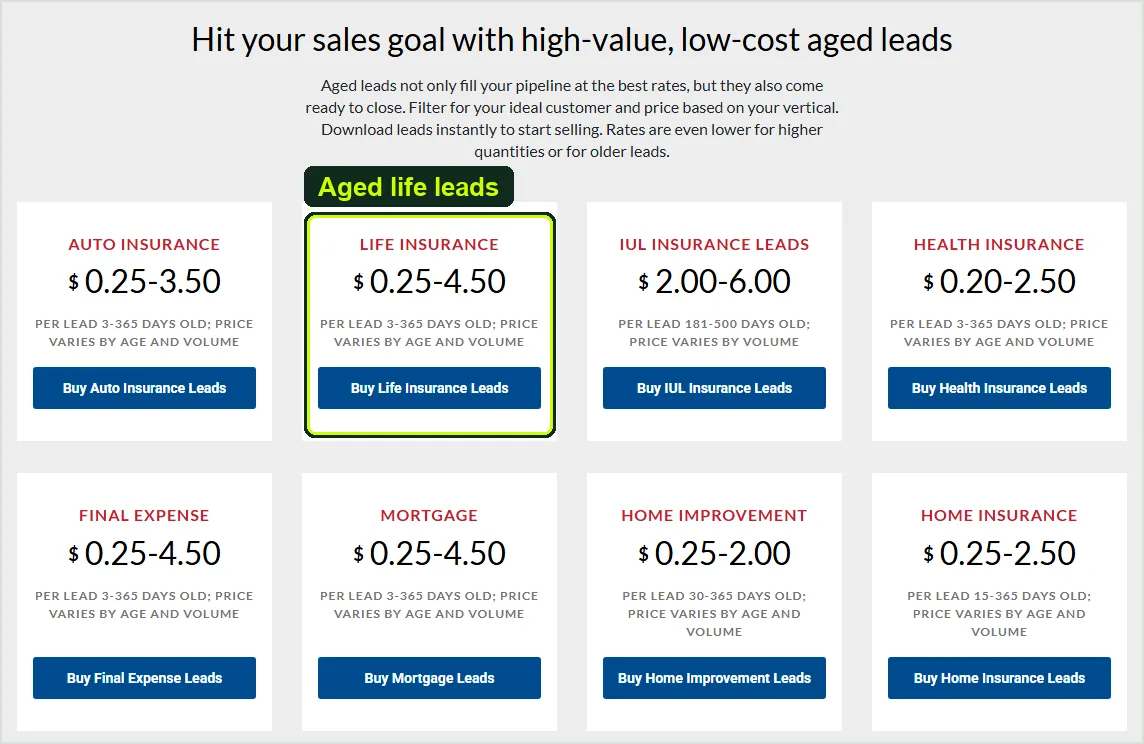
ActiveProspect's 2026 lead pricing guide gives the fresh-lead ranges below, and Aged Lead Store's price list shows aged life records at $0.25 to $4.50 depending on age and volume.
| Lead type | Price per lead | Who else gets it |
|---|---|---|
| Aged, 3 to 365 days old | $0.25 to $4.50 | Many buyers over time |
| Shared real-time | About $20 to $45 | Other agents, at the same moment |
| Exclusive | About $75 to $150 | Only you |
| Live transfer | About $80 to $200+ | Only you, on the phone now |
ActiveProspect adds that acquisition cost per life client can reach $2,000 to $3,000 once every lead that did not buy is counted. Budget for that, not the sticker price.
What exclusive means when you read the fine print
Exclusive means the vendor sells that record once. It does not mean the consumer spoke only to that vendor.
EverQuote's own guide says its shared leads never go to more than three agents, about 1.5 on average, and never to two agents with the same carrier. The page also admits shoppers ask several companies, so exclusive protects you on one platform, not across the market.
QuoteWizard describes its exclusive life product as delivered to one agent and says customers report live transfers closing at over 30%. That is vendor-published feedback, not an audited rate: a ceiling to test.
Cost per issued policy, the only number that pays you
Lead price is an input. What pays you is the lead cost behind each policy that issues.
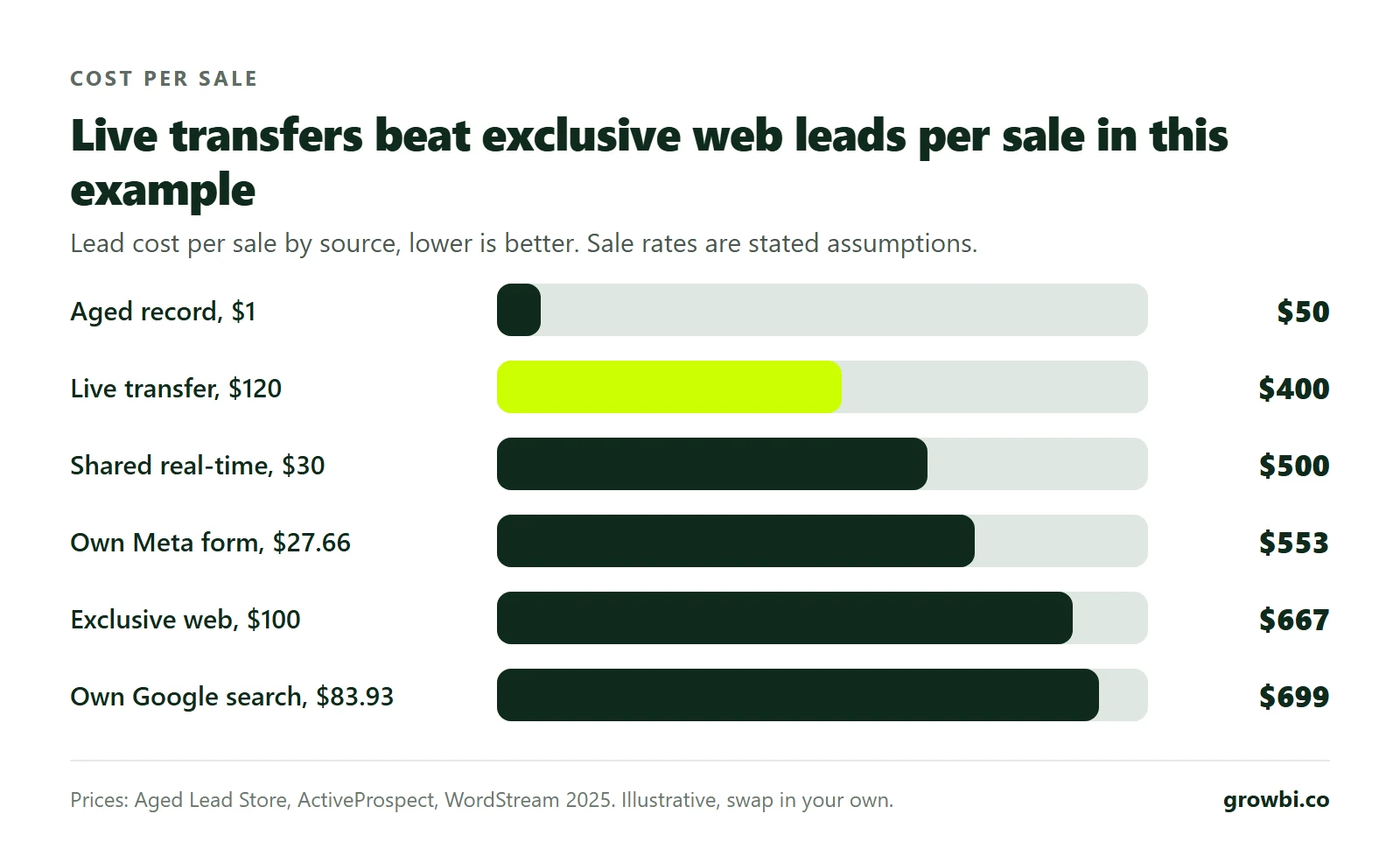
The table runs published prices through sales per 100 leads. The aged and live transfer rates come from vendor pages; the other rates are our planning assumptions, so swap in your own.
| Source | Price per lead | Sales per 100 leads | Lead cost per sale |
|---|---|---|---|
| Aged record | $1 | 2 | $50 |
| Shared real-time | $30 | 6 | $500 |
| Exclusive web | $100 | 15 | $667 |
| Live transfer | $120 | 30 | $400 |
| Own Meta lead form | $27.66 | 5 | $553 |
| Own Google search | $83.93 | 12 | $699 |
We judge all lead generation this way, as in our roofing lead source comparison. In the med spa account behind our CPL vs CPA research, only 41.6% of leads booked and arrived, so the real price was $38.48 per arrival, not $16 per lead.
TCPA consent after the one-to-one rule
The one-to-one consent rule the FCC adopted in 2023 is gone: a federal court vacated it before it took effect, and the FCC deleted it in July 2025.
In January 2025 the Eleventh Circuit held in Insurance Marketing Coalition v. FCC that the agency had exceeded the statute. The FCC's order of July 14, 2025 repealed the revision and restored the earlier definition of prior express written consent.
That definition still binds you: autodialed or prerecorded telemarketing calls need a signed written agreement to call that number. Under 47 U.S.C. 227, consumers can sue for $500 per violation, and up to three times that when it was willful.
In practice: buy only leads with a consent record naming your agency, scrub against the Do Not Call registry, and call only where you hold a producer license. This is general information, not legal advice.
Running your own life insurance ads on Meta
Meta classifies life insurance ads as Financial products and services, and that category changes how you reach buyers.
Meta's help center names insurance as an example and has required the category for US advertisers since January 21, 2025. Age, gender, ZIP code, exclusion targeting, lookalikes and saved audiences are limited or unavailable.
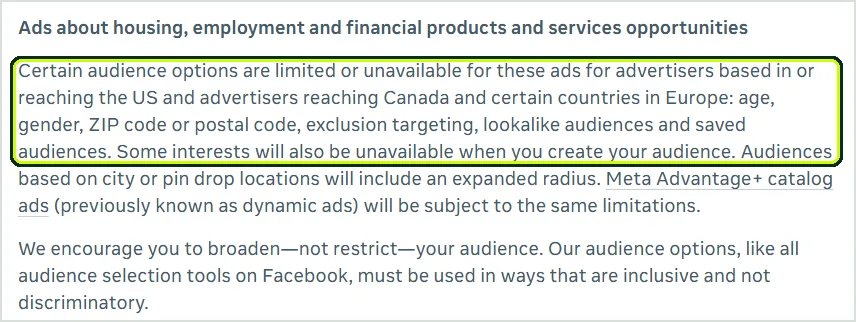
So the creative does the filtering. Meta's personal attributes policy allows a passing reference to an age group but bans implying you know the viewer's age. "Coverage built for seniors" fits the rule; "Are you over 60?" breaks it.
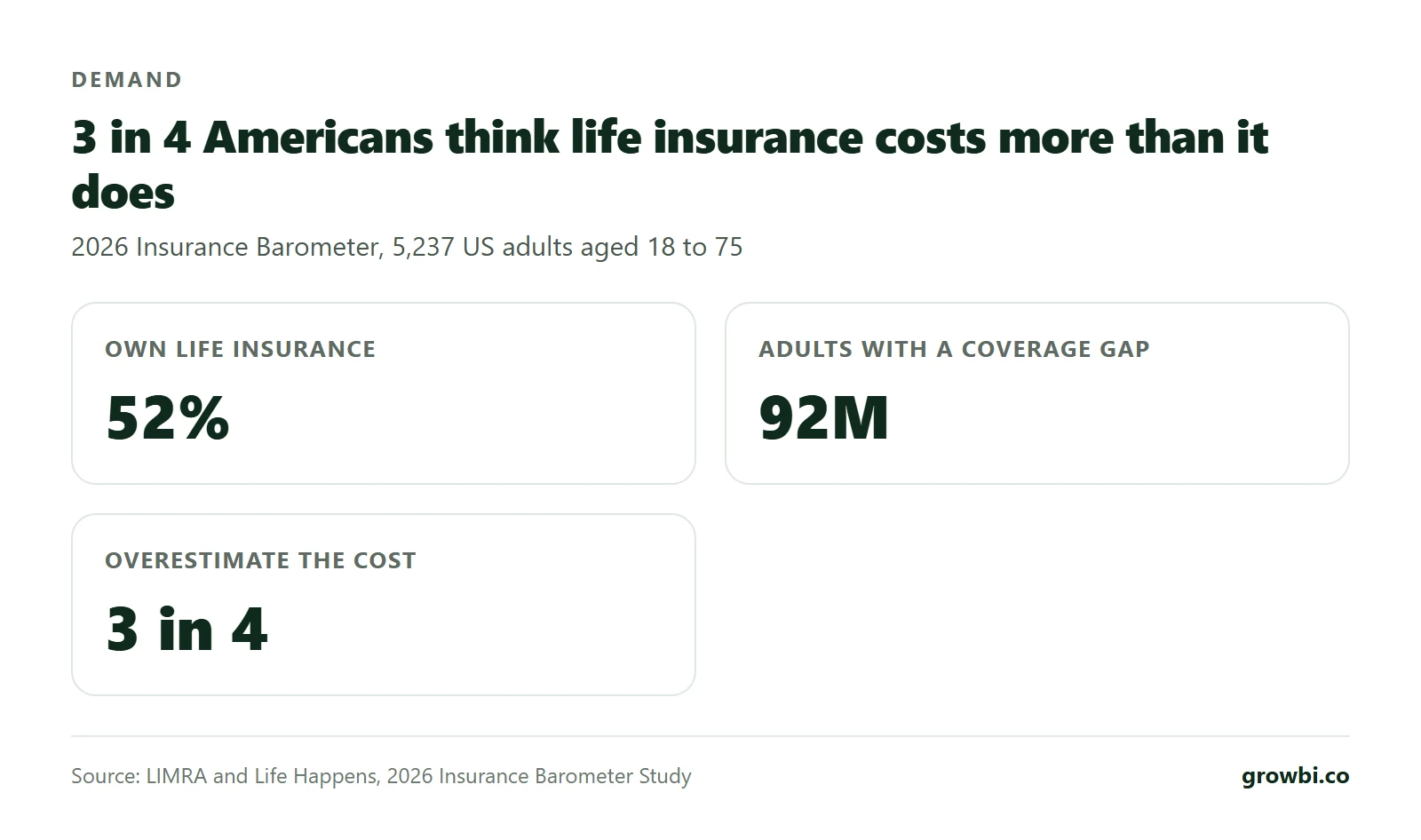
Price is the hook that works inside these limits. LIMRA's 2026 Insurance Barometer found that 52% of Americans own life insurance, 92 million adults have a coverage gap, and about three in four overestimate the cost.
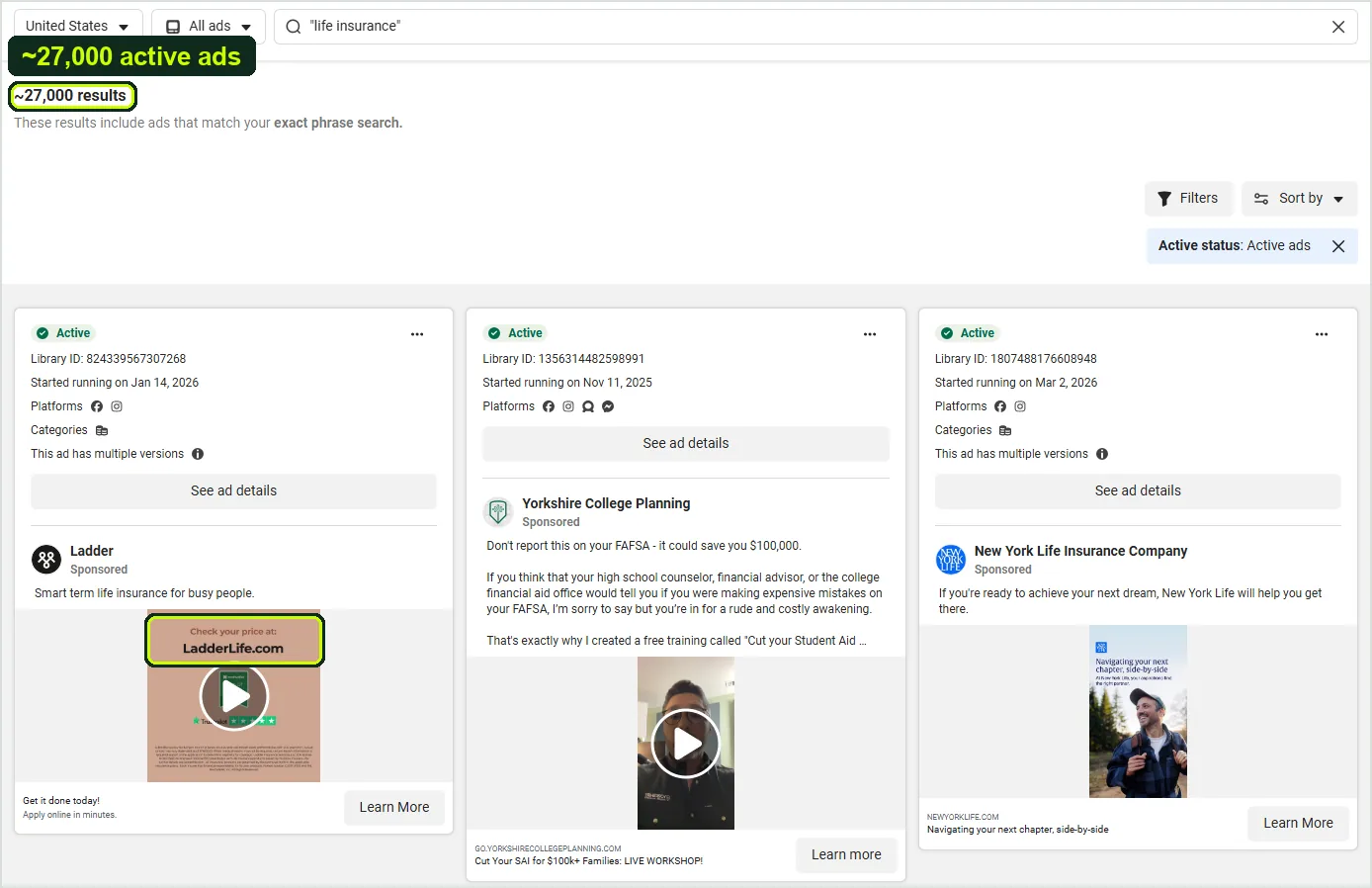
Show a real monthly price for a set coverage amount, then ask coverage amount and tobacco use on the quote form, so you only call people a carrier will write.
What you bid against on Google
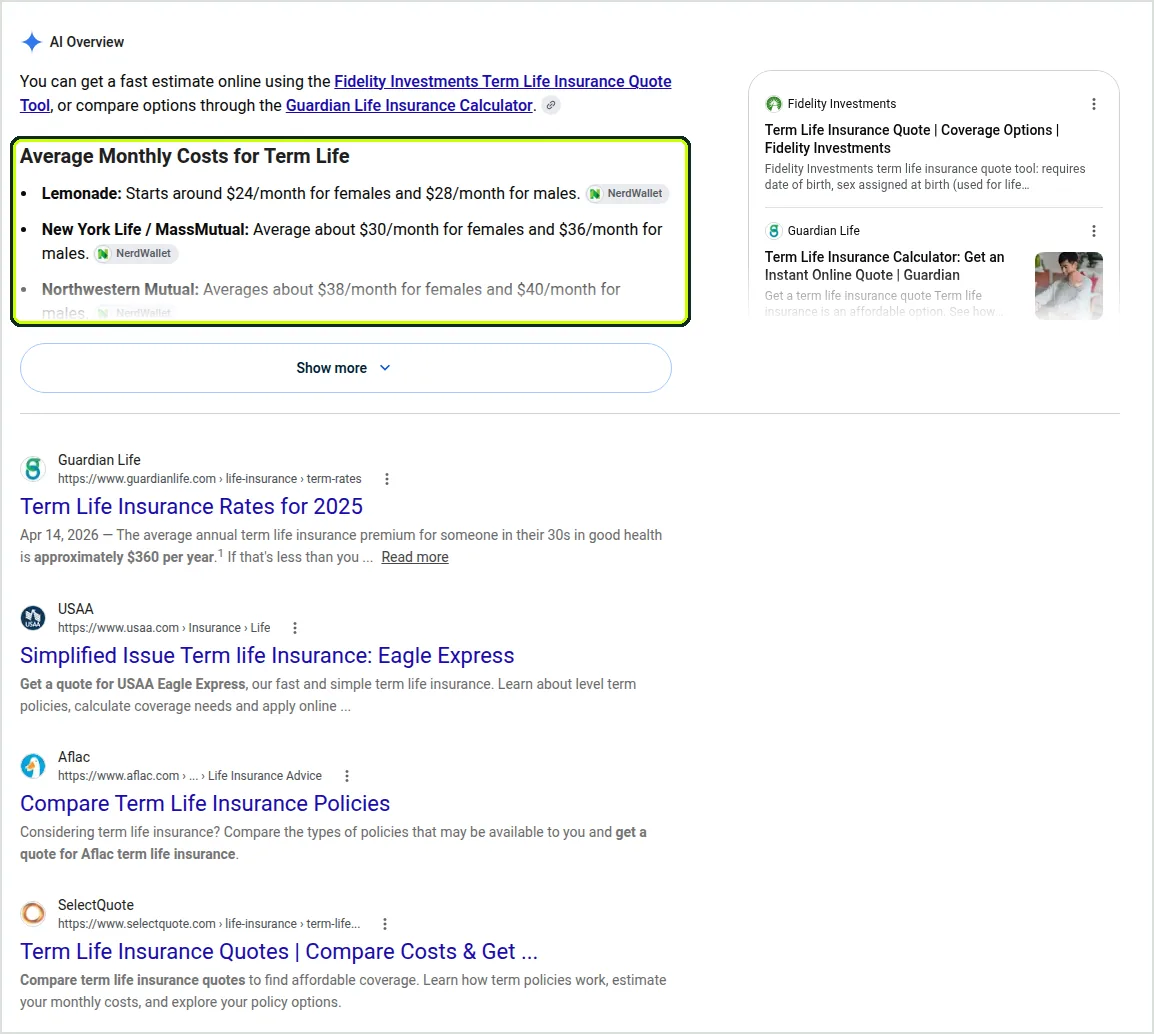
On Google, an agent's ad competes with carriers, quote engines and an AI Overview that lists prices before anyone clicks.
WordStream's 2025 Google Ads benchmarks put Finance and Insurance at a $3.46 average cost per click, a 2.55% conversion rate, the lowest of any industry, and $83.93 per lead.
Search pays when your page offers what quote engines lack: a licensed person who handles health conditions and calls back in minutes.
Questions to ask a lead vendor before the first order
Get these answers in writing before you pay, because return disputes start after the money is gone.
- Consent proof. Will you send the consent language and a record for each lead that names my agency?
- Share count and speed. How many agents get each lead, and is it sent in seconds or in batches?
- Returns. Which leads qualify for credit, within how many days, and is it credit or cash?
- Source. Which sites or ads produced the lead, and was it sold as exclusive before?
When generating your own leads beats buying them
Buy leads when you need volume this month. Build campaigns when you can work exclusive leads fast and want an asset that keeps paying.
Your own funnel wins on three counts: every lead is exclusive, you write the consent language, and the retargeting pool stays yours.
It loses when nobody answers fast. At WordStream's $27.66 all-industry average Facebook lead cost (no insurance figure is published), a self-run Meta campaign matches the $400 live transfer row at about 7 sales per 100 leads. At the $83.93 search benchmark it needs 21.
Our rule of thumb: if you close fewer than 10 of 100 exclusive leads, fix the sales process before you pay for ads. At 10 per 100, a $27.66 Meta lead works out to $277 per sale, below every fresh-lead row in the table.
Whoever runs it, insist on reporting down to issued policies, the standard behind our finance campaign management.
A follow-up system that turns leads into applications
Whatever the source, speed and persistence decide what a lead is worth, so build the follow-up before buying the first lead.
The sequence we build into every finance funnel.
Text in the first minute
An automatic text confirms the quote request and names the agent who will call.
Call inside 5 minutes
Route each new lead to whoever is free.
Six touches in 7 days
Call and text twice on day one, then once a day, with one voicemail.
Log four outcomes by source
Contacted, quoted, applied, issued. Without these fields, cost per issued policy is a guess.
Review every week
Cut any source above target cost per issued policy for three straight weeks.
Tracking cost per booked appointment follows the same logic: one sheet, one row per lead, one column for the source.
FAQs
What is the 5 minute rule for leads?
It means calling every new lead within 5 minutes of the form. On shared leads the first agent to connect has the best shot, and a text in the first minute holds the lead until you call.
Why do most life insurance agents quit?
We have not found a reliable published quit rate. The money side is clear: lead bills come due before commissions arrive. Start with a lead budget you can carry for 90 days and cut draining sources early.
Are free life insurance leads worth it?
Free leads come from referrals, past clients, events and social posts. They cost time instead of money and start with trust in place. Use them next to paid sources if you need steady volume.
Conclusion
No lead type is cheap or expensive on its own. Aged, shared, exclusive and live transfer leads each pay at a certain follow-up speed and close rate.
Price every source by cost per issued policy, buy only leads with consent records, and build Meta and Google campaigns around the financial category rules.
Book a free 15-minute call and bring your vendor list. We will work out what each source costs per issued policy and whether a Meta or Google campaign of your own would beat it.
Get this system built for your business
Book a strategy call and we will model a realistic appointment target from your budget, market, and offer.